 Vidova
Text-mode reveal
A launch video for a developer tool. Each shot is drawn live in text characters, then a scan turns it into the real footage, ending on your name.
What Vidova will do
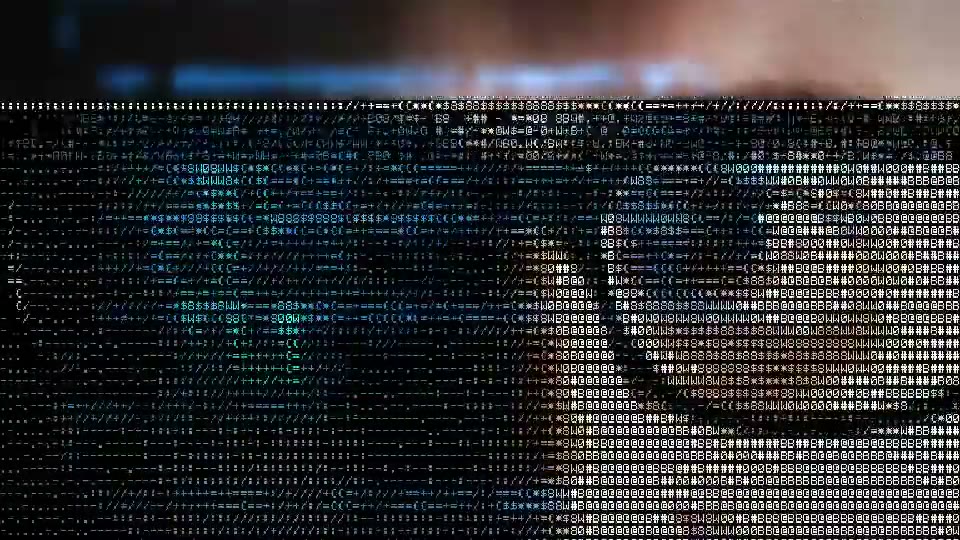
Make a 14-second, 16:9 launch video for my developer tool. The footage is drawn live in characters, so the whole picture is made of code, and a scan resolves it line by line into the real video on the beat. Footage: I attach a close-up of eyes behind glasses with code reflected in them, a close-up of a code editor, hands typing on a laptop, and a dark animation of a glowing network for the title. The glyphs: Draw each shot as a monospace grid of characters, about 15 by 25 pixels a cell. Each cell picks its character by the brightness of the picture there, from a space through dots, slashes, braces and hash signs to "@", and takes the colour of the picture with a little terminal green, on near black. A few characters flicker like live output. Read the dark code editor brighter, so its code shows as characters. The scans: Each shot starts in characters. On the beat, a scan prints down the frame line by line: the rows above it turn into the real video with a short flash, the scan's own row prints in white, and the rows just under it scramble as they decode. The eyes resolve at 1.9 seconds and the code at 4.3 seconds, each over about half a second. Hero moment: The typing hands start in big, coarse characters that get finer on three beats, at 6.2, 6.6 and 7.1 seconds, under a riser. On the drop at 7.6 seconds the scan resolves the whole frame in a third of a second with a deep impact on the same frame. Every shot pushes in slowly, about 6 percent. Title, 9.5 to 13.8 seconds: Over the network in dim characters, my product name "relay" prints in dense, bright mint characters (#7dffb2), shaped like large bold Space Grotesk letters, by a cursor column that sweeps across in 0.7 seconds. At 10.9 seconds "$ npx relay deploy" types under it in IBM Plex Mono with a blinking block cursor. Sound: An electronic underscore with a quiet build and a drop at 7.6 seconds, at 75 percent before the drop and full after, with a 0.9-second fade at the end. Quiet keyboard typing under the first shots and under the command. A short digital sweep on the first two scans, and a short glitch when the name prints.